An official Swiss Au750 horological hallmark is a legally regulated precious-metal stamp—most notably the Swiss Official Precious Metal Control (CMP) St. Bernard dog head and the 750 balance scales—certifying that a watch case and bracelet contain a minimum of 750 parts per thousand (75.0% by mass) pure elemental gold.
Key Quantitative Laboratory Takeaways
- Since the 1995 Swiss Precious Metals Control Act revision, the St. Bernard dog head is the mandatory international hallmark for all Swiss watch cases crafted in solid 18K gold (Au750) or 950 platinum (Pt950).
- Authentic cold-struck and femtosecond-laser hallmarks penetrate 120 to 180 microns into solid 18K gold lugs and deployant clasps, exhibiting crisp micro-stepped bevels under 20x magnification.
- Non-destructive Fischer X-Ray Fluorescence (XRF) spectroscopy validates the hallmark by confirming 75.0% to 75.4% elemental gold (Au) with zero underlying steel (Fe), nickel (Ni), or tungsten (W).
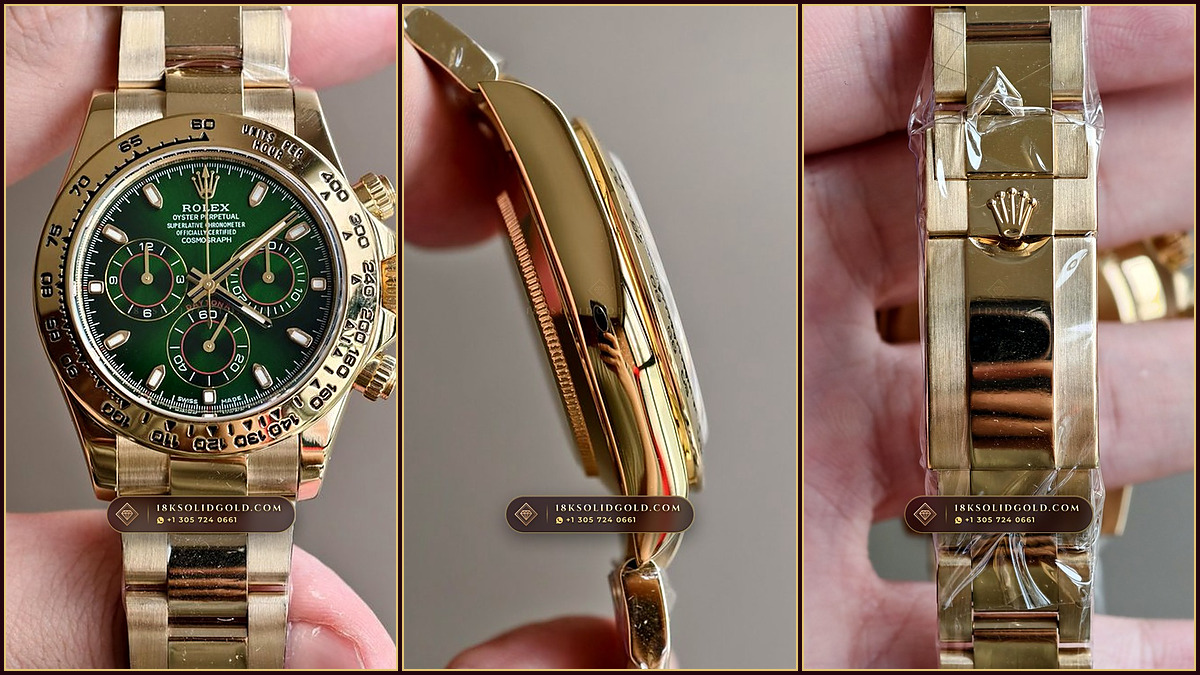
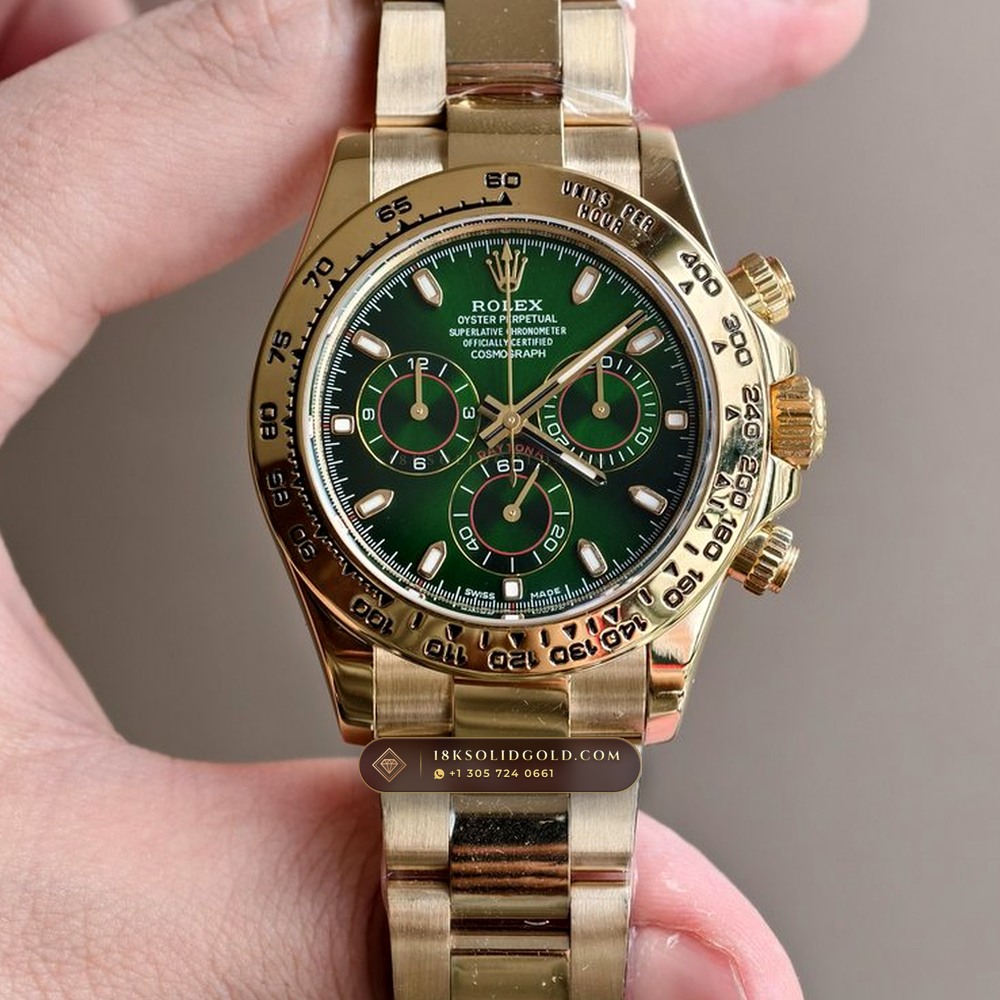
- Full-bracelet solid 18K gold chronographs such as the Rolex Cosmograph Daytona Ref. 116508 (216.5g) carry hallmarks on the underside of all four lugs and inside the Oysterlock folding clasp blade.
| Hallmark Symbol | Fineness Mark | Elemental Purity (%) | Specific Gravity (g/cm3) | Primary Horological Application | Assay Verification Method |
|---|---|---|---|---|---|
| Swiss St. Bernard Dog Head | 750 / Au750 | 75.0% Pure Gold (18K) | 15.40 – 15.85 g/cm3 | Rolex, Patek Philippe & AP 18K Cases | Fischer XRF + 20x Loupe Micro-Relief |
| Common Control Balance Scales | 750 in Octagon | 75.0% Pure Gold (18K) | 15.40 – 15.85 g/cm3 | Vienna Convention Cross-Border Assay | XRF L-Alpha (9.71 keV) Peak Ratio |
| French Eagle Head (Tete d'Aigle) | 750 / Or 18 Carats | 75.0% Pure Gold (18K) | 15.50 – 15.80 g/cm3 | Place Vendome & Cartier Haute Horlogerie | Bureau de Garantie Micro-Punch Audit |
| Swiss Bouquetin (Ibex Head) | 950 / Pt950 | 95.0% Pure Platinum | 21.10 – 21.45 g/cm3 | Daytona Platona 116506 & Day-Date 228236 | Fischer XRF Pt Peak + Hydrostatic Mass |
| Geneva Key & Eagle Seal | Poincon de Geneve | 75.0% Au / 95.0% Pt | 15.58 / 21.45 g/cm3 | Patek Philippe Heritage & VC Calibres | Chronometric & Finishing Inspection |
What Does the Swiss St. Bernard Poincon Mean on an 18K Gold Watch?
The Swiss St. Bernard dog head hallmark (Poincon d'origine bernard) is the sovereign official stamp of the Central Office for Precious Metals Control in Bern, certifying that a horological case contains at least 750 parts per thousand (75.0%) pure elemental gold or 950 parts per thousand (95.0%) pure platinum. Introduced on August 1, 1995, to replace the historical Helvetia female profile, the St. Bernard mark applies uniformly to domestic and exported Swiss precious-metal watch cases. Under a 20x triplet loupe, a genuine cold-struck or precision laser-ablated St. Bernard hallmark exhibits a distinct micro-collar outline and a tiny letter "G" or assay office cipher nestled beneath the dog's chin.
At 18K Solid Gold Salon Place Vendome, every solid 18K yellow, Everose, and white gold timepiece in our archive undergoes microscopic hallmark verification alongside non-destructive spectroscopy. Whereas electroplated or PVD-coated stainless steel replicas rely on shallow acid-etched markings that blur under 10x magnification, solid Au750 bullion cases display sharp vertical walls inside the stamp cavity because the 18-karat alloy flows cleanly under hydraulic coining pressure.
How Are Au750 Balance Scale and Eagle Head Marks Verified by XRF?
A physical hallmark on a watch lug is only authoritative when corroborated by non-destructive X-Ray Fluorescence (XRF) elemental spectroscopy and gravimetric mass measurement. During our Place Vendome pre-shipment protocol, a Fischer Fischerscope XRF analyzer directs a collimated primary X-ray beam onto the hallmarked lug, exciting the inner atomic shells of the alloy. A genuine solid 18K gold case emits characteristic L-alpha (9.71 keV) and L-beta (11.44 keV) fluorescence photons corresponding to 75.00%–75.40% gold (Au), balanced by 12%–16% silver (Ag), 8%–12% copper (Cu), and 1.5%–2.2% platinum or palladium in Everose and white gold formulations.
Crucially, the XRF spectrum must show 0.00% iron (Fe), 0.00% nickel (Ni), and 0.00% tungsten (W) across both the outer lug bevels and the inner spring-bar holes. When paired with a calibrated Mettler-Toledo 0.01g analytical balance readout—confirming 216.5g on a full-bracelet yellow gold chronograph or 186.8g on a rose gold integrated sports watch—the collector receives irrefutable mathematical proof of solid precious-metal construction.

| Reference Model | Alloy & Fineness | Lug Hallmark Position | Clasp Hallmark Stamp | Verified Total Mass | Movement Calibre |
|---|---|---|---|---|---|
| Rolex Daytona Ref. 116508 / 126508 | 18K Yellow Gold (Au750) | All 4 Underside Lugs (750 + St. Bernard) | Inner Oysterlock Blade (750 + Coronet) | 216.5g – 216.8g | Cal. 4130 / Cal. 4131 |
| Rolex Day-Date 40 Ref. 228235 | 18K Everose Gold (Au750) | 4 Underside Lugs + Caseback Fluting | Concealed Crownclasp Inner Hinges | 209.4g – 211.8g | Cal. 3255 Chronometer |
| Patek Philippe Nautilus Ref. 5711/1R | 18K Rose Gold (Au750) | Inner Case Flank & Sapphire Ring | Fold-Over Deployant Wing (Au750 + Calatrava) | 186.8g – 188.2g | Cal. 26-330 S C |
| Audemars Piguet Royal Oak Ref. 15500OR | 18K Pink Gold (Au750) | Caseback Octagonal Rim (750 + Scales) | AP Double-Folding Blade (Au750) | 208.4g – 210.0g | Cal. 4302 Automatic |
| Rolex Daytona Platona Ref. 116506 | 950 Platinum (Pt950) | All 4 Underside Lugs (Pt950 + St. Bernard) | Inner Folding Clasp (Pt950 Stamp) | 281.5g – 282.4g | Cal. 4130 Chronograph |
Where Are Hallmarks Located on Rolex, Patek Philippe, and Audemars Piguet Cases?
Each Geneva and Le Brassus manufacture follows a strict architectural convention for hallmark placement to preserve the mirror-polished and satin-brushed geometry of the visible case flanks. On solid 18K gold and Pt950 Rolex Oyster cases (including the Cosmograph Daytona, Day-Date 40, Sky-Dweller, and Submariner), four recessed stamps are struck into the flat underside of the four lugs: the 750 balance scales, the Swiss St. Bernard dog head, the Rolex coronet, and the maker's responsibility mark, complemented by deep stamps on the inner Oysterlock or Crownclasp folding blades.
On Patek Philippe Nautilus and Aquanaut references with sapphire exhibition casebacks, the 750 scale mark, St. Bernard poincon, and Calatrava cross are positioned along the satin-brushed underside of the octagonal case ears and on the inner wing of the fold-over deployant clasp. On Audemars Piguet Royal Oak models, the hallmarks flank the eight hexagonal caseback screws at the 12 and 6 o'clock segments, framing the hand-finished 22-karat or 18-karat gold oscillating weight visible through the sapphire crystal.

Explore Verified Rolex Solid 18K Gold References in Our Register
Every timepiece referenced in this monograph is available for immediate allocation with pre-shipment 4K Mettler-Toledo gram weighing, Fischer XRF Au750 spectroscopy, and 6-position Witschi Chronoscope certification. Navigate directly to the 18K SOLID GOLD Homepage Master Register, the Rolex Solid 18K Gold Collection Hub, or the Complete 774-Watch Catalogue:
Ph.D. in Precious Metal Crystallography (ETH Zurich), 22 Years in Geneva & Paris Horological Assaying.
More Horological Monographs in the 18K SOLID GOLD Journal
- 18K Yellow Gold vs. Everose Rose Gold vs. Grey White Gold: Horological Alloy Composition & Vickers Hardness (August 27, 2026)
- Solid 18K Gold (Au750) vs. PVD Gold-Plated & Tungsten Watches: Gravimetric Scale & XRF Detection Protocol (September 9, 2026)
- Patek Philippe Nautilus & Aquanaut Solid 18K Rose Gold Weight Index: Ref. 5711/1R, 5712/1R, 5980/1R & 5167R (September 24, 2026)
- 950 Platinum (Pt950) & Ice-Blue Dial Horology: Why the Rolex Daytona Platona 116506 Weighs 282.0 Grams (October 8, 2026)
- View All 18K SOLID GOLD Research Journal Articles →